





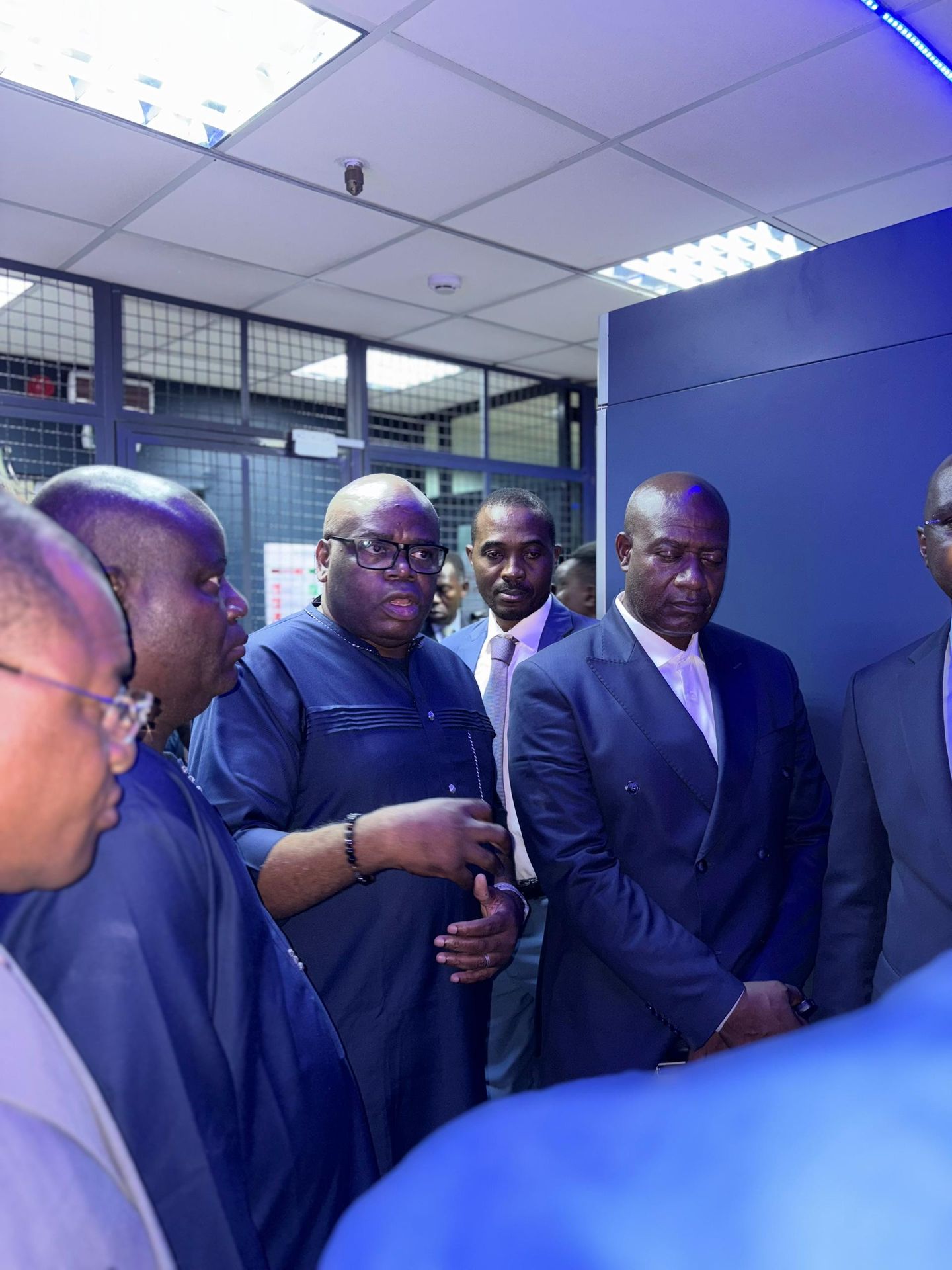
Just another day in the Bonanjo port area? Not quite. That afternoon, a particular buzz electrified the atmosphere. At the entrance of a building with a sober yet sharp architecture, an official motorcade pulled up with sirens wailing. Out stepped Minette Libom Li Likeng, Minister of Posts and Telecommunications of Cameroun, along with her delegation. The digital heart of the nation was about to beat stronger.
She did not come to inaugurate a simple server room. What she is standing on is a Tier 3-level datacenter, one of the most advanced in Central Africa, operated by ST DIGITAL, a 100% Cameroonian, 100% independent company. Better still: a tangible symbol of digital sovereignty, at a time when sovereignty, precisely, can no longer be decreed — it must be built, brick by brick, bit by bit.
A strong signal at a time of crucial choices
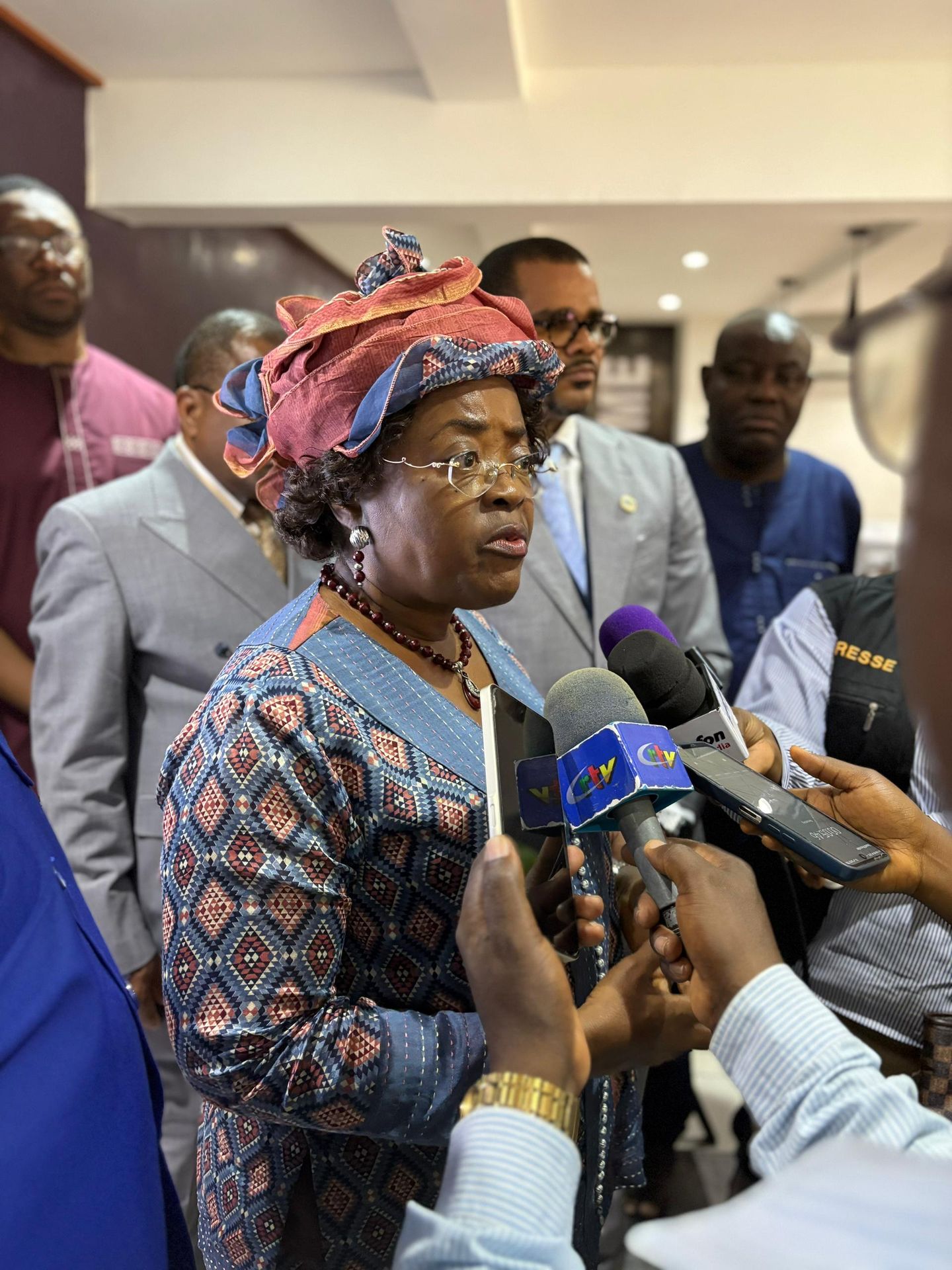
"I am impressed," declares the minister, her eyes bright with a mix of astonishment and hope. Behind this protocol phrase lies a politically significant stance.
For the ministerial visit does not come out of nowhere. It is part of a critical tipping point for Cameroun. On one hand, a new personal data protection law, adopted in 2023, which now requires administrations and companies to localise and secure their sensitive data within the national territory. On the other, an economic landscape still largely dependent on foreign servers — thereby exposing our data to major legal, technical and geopolitical risks.
ST DIGITAL, in response, offers a local alternative, compliant with international standards (ISO 27001, Tier 3), while remaining rooted in Cameroonian socio-economic realism.
Youth at the helm, a vision in mind
The most striking feature? It is neither the climate-controlled walls nor the gleaming server racks, but the human behind the machine. The minister commends a team composed predominantly of young engineers trained in-country, visibly driven by their mission.
Anthony Same, CEO of ST DIGITAL, admits it plainly: "It was an uphill battle. No one believed in us at the beginning. So we started small, proved ourselves, and the clients came."
This "we" represents a generation that refuses the prevailing fatalism. In a country where access to financing remains a bottleneck for tech projects (less than 1% of the public budget dedicated to innovation in 2024 according to the Ministry of Scientific Research), this breakthrough is almost an industrial miracle.
Artificial intelligence as a horizon
But ST DIGITAL does not stop at simple hosting. The minister discovers with surprise that the company has already anticipated the future: a cluster dedicated to artificial intelligence is operational in the datacenter.
A pioneering approach that resonates with national ambition. Adopted in June 2025, the National Artificial Intelligence Strategy (SNIA) envisions, by 2040, 60,000 trained talents (including 40% women), 12,000 jobs created, and a contribution of 1% to GDP.
While national consultations on AI have barely concluded, the private sector has already taken the lead. It is no longer merely a support, it is a catalyst. "What I see here is inspiring. It is not for the State alone to drive digital transformation. It is everyone's responsibility," the minister emphasizes.
Digital sovereignty: a concept finally taking shape
The word is often misused. It serves at once as a political slogan, a technocratic mantra, and sometimes a smokescreen. But in Douala, this July 14, digital sovereignty has a face. That of a concrete structure — connected, ventilated, standards-compliant. A space where Cameroonian data, whether administrative, medical, or strategic, can rest in peace — at home.
And that is the whole challenge. Reducing dependence on foreign cloud giants (AWS, Azure, Google Cloud), protecting our data from the extraterritoriality of foreign laws (American Cloud Act, European GDPR), and above all rebuilding trust in local capabilities.
Persistent challenges, but positive signals
Yet the challenges are numerous. Cameroon's legal framework is still nascent and struggles to be enforced. Interoperability between public and private systems remains embryonic. And the culture of digital adoption within the administration is advancing at a snail's pace.
But the positive signals are there: the ministerial visit represents a strong political act in favor of sovereign cloud. It sends a clear message: Cameroun no longer simply wants to consume the digital, it wants to produce it.
What now?
ST DIGITAL did not receive a visit. It underwent an audit. And in light of the official statements, the report is highly commendable.
The challenge now is to ensure that this momentum does not fizzle out. That the government converts the opportunity through strategic partnerships, public procurement open to local players, and continued support for national innovation.
For what this visit reveals is that in Cameroun, the digital future has already begun — and that, surprisingly, it speaks with a local accent.